
Two of the questions pet owners are increasing asking is: Is my pet at risk of catching COVID-19? What will happen if my pet is infected with COVID-19?
This article aims to answer these 2 questions. 🙂
To some people, this may sound incredulous, as they may think that COVID-19 is a pandemic event for humans. They may think: How does COVID-19 even threaten the animals, when the humans are already busy fending for themselves? Pet owners may not think likewise.
News have reported that it is possible that pets can get COVID-19 too. To some extent, it depends on the authority on whether to test the animals which will lead to more discoveries (and potentially uncover more positive cases). If there's no testing, then we will not know if the pet is at risk or already infected unless they start displaying symptoms and fall sick.
As more people around the world vaccinates, the hope is that we may soon return to a more normal life. Still, the onus is on us pet parents to take steps to protect ourselves and the ones around us, including our dogs and cats. The transition to endemic reality may mean that more people will get the virus, and thus it is important to be aware on what this will mean and happen to our pets too.
Here's a visual summary for you pet owners - courtesy of the team from Pawmeal! 😊
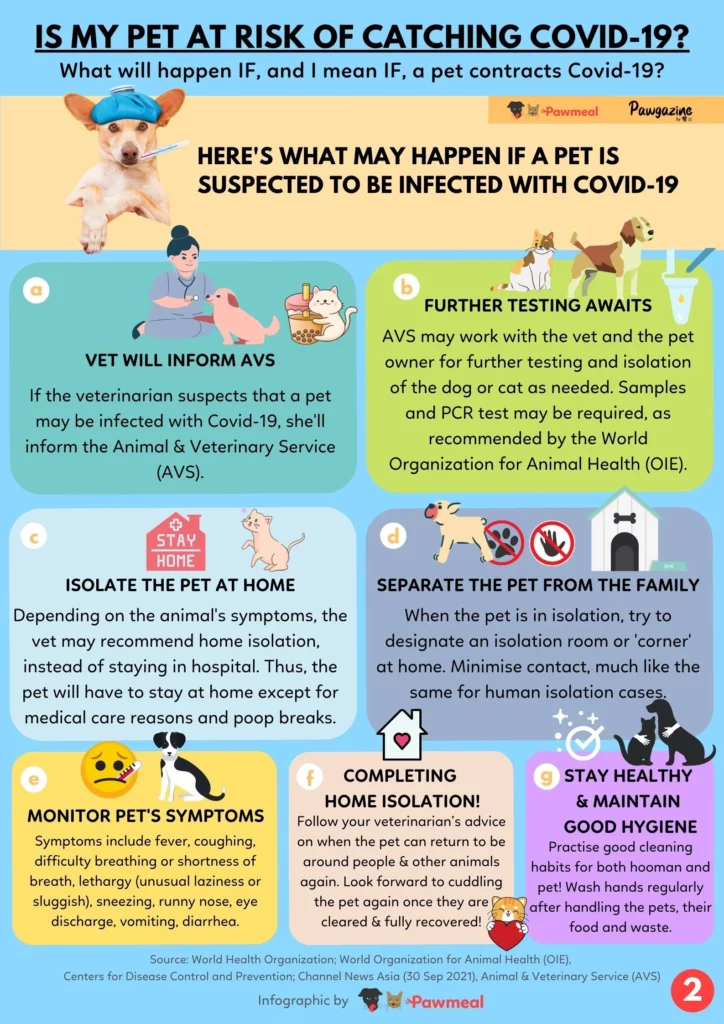
What if your closed ones or a family member is tested positive or is issued a quarantine order instead, and you have a pet at home? This article elaborates on how to take precautions to protect your pet from a potential close contact high risk person.
Source: World Health Organization; World Organization for Animal Health (OIE), Centers for Disease Control and Prevention; Channel News Asia (30 Sep 2021), Animal & Veterinary Service (AVS)
You may be wondering: What should you do if your pet is a close contact to a positive case?
It's actually not unusual to be worried about pets getting infecting with COVID-19, especially during uncertain times during this still-ongoing pandemic.
There has been a few cases of animals being tested positive for COVID-19 as early as Mar 2020, such as this Belgian case. However, in Singapore, there has not been any confirmed cases of pets and animals contracting Covid-19 to date (as of 03 Oct 2021), although there have been some confirmed cases of infected pets overseas.
According to the Centers for Disease Control and Prevention, the possibility of pets spreading Covid-19 to hoomans is low. However, it is possible that humans can spread the virus to their pets especially if they are in close contact with them (which is very common, all the cuddles and kisses, we know).
Having said that, given the raging pandemic that is still ongoing today (and likely to become an endemic event), it is still important for pet owners to learn some tips on how to protect their little furry friends if a family member is tested positive or suspected to be infected with COVID-19. This is because it's all about protecting yourself, your family and your pet!
Here's some tips for you when it comes to caring for your pet if there is a suspected close contact case or positive case in your family.
Our pets are dependant on us for everything in their lives. So this article hopes to empower you with the knowledge to take steps to protect your pets during this still-uncertain times. Here's an infographic by Pawmeal© and Pawgazine© to help you understand everything in a snapshot, too! 😊
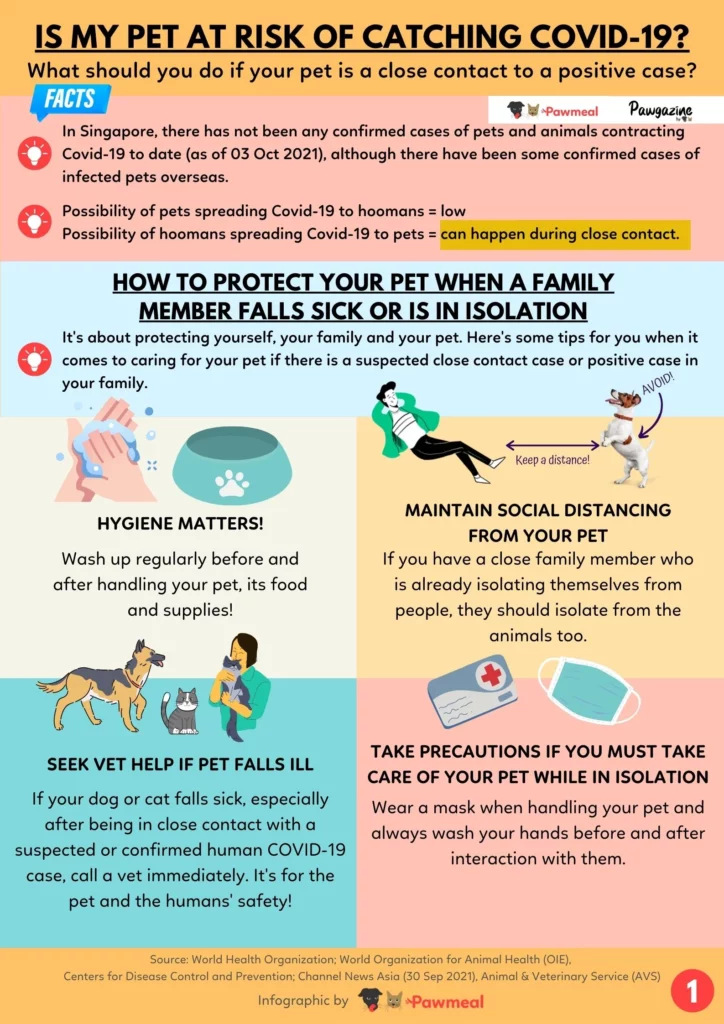
For Singaporean pet owners, there may not be any confirmed COVID-19 positive pet cases so far, but we never know when our dogs or cats may be already at risk from the coronavirus. Here's an article that provides a summary on how to protect your pet should your pet be at risk of getting infected.
Source: World Health Organization; World Organization for Animal Health (OIE), Centers for Disease Control and Prevention; Channel News Asia (30 Sep 2021), Animal & Veterinary Service (AVS)